
From PNR to One Order: Rethinking airline retail
For decades, airline retail has been built on a language that made sense in the 1970s.
PNRs. E-tickets. EMDs. Booking classes. Filed fares.
It worked. It scaled. It powered global distribution. But it was never designed for modern retail.
Now, as IATA’s Offer and Order framework moves from roadmap to implementation, and as more airlines publicly commit to One Order transformation programmes, the conversation has shifted. This is no longer about whether the industry will move on from PNR. It is about how quickly, and who is operationally ready.
If you are a CIO, CTO, Head of Commercial or Revenue leader, this is not just a technology migration. It is a structural rethink of how your airline creates, sells and services value.
Why PNR is no longer enough
The PNR was designed as a booking container. It holds segments, names, SSRs. It connects to a ticket, which connects to accounting. Every change triggers a series of interdependent updates across systems.
The complexity is hidden until you try to do something new.
Dynamic bundles. Subscription models. Continuous pricing. Cross-channel servicing. Real-time disruption handling.
Suddenly, the cracks show.
That is why the move toward Offers and Orders matters. It replaces fragmented records with a single order view of the customer. One record that holds flights, ancillaries, bundles and payment. Retail logic moves forward. Fulfilment becomes simpler.
Ann Cederhall
And in the past 30 days alone, we have seen tangible progress. Several European carriers have announced expanded One Order pilots focused on disruption management, while a US-based airline tech provider confirmed a new order management deployment aimed at simplifying post-booking servicing. IATA has also continued to publish updates on its Order Management maturity framework, signalling that airlines are moving beyond theory and into staged capability assessments.

NDC was the bridge, not the destination
For years, NDC was framed as the disruption.
But NDC was always the transport layer. The pipe.
The real shift is the dismantling of legacy constructs behind it.
Even now, many airlines who describe themselves as “doing NDC” are still pricing off filed fares, still creating traditional tickets, still constrained by PNR logic. The front end looks modern. The back end is not.
That gap is where programmes stall.
Because modern retailing is not about distribution standards alone. It is about ownership of the offer creation process, unified order servicing, and control of product strategy across channels.
Recent industry updates show major retail platform providers announcing deeper integrations between offer management engines and revenue optimisation systems. That is significant. It signals alignment between commercial strategy and technical execution. The airlines that win will not just expose offers differently. They will build them differently.
Operational reality: The hidden complexity
Here is the uncomfortable part.
Moving from PNR to One Order is not a clean switch.
It is coexistence.
Legacy PSS. New order management layers. Interline partners still on tickets. Agencies operating in mixed modes. Finance teams reconciling two worlds.
This is where many programmes underestimate the human factor.
You need architects who understand legacy PSS logic and modern retail engines. You need BAs who can translate between commercial ambition and system constraints. You need leaders who can align revenue, distribution and IT around a single operating model.
We see this daily at Thornton Gregory. Airlines are not struggling because the technology does not exist. They are struggling because the integration of old and new demands very specific capability.
“OOSD limbo” is rarely a provider issue. It is a translation issue between legacy architecture and future-state ambition .
If your teams cannot operate in both worlds, progress slows.
Commercial impact: More than technology
For Heads of Commercial and Revenue, this shift is profound.
In a PNR world, product strategy is constrained by fare filing logic and inventory classes. In an Offer world, pricing becomes contextual. Bundles become dynamic. Ancillaries become modular.
In the past month, we have seen further AI-driven retail enhancements announced by airline tech firms, particularly around personalised offer construction and real-time ancillary optimisation. These are not theoretical features. They rely on unified order views and modern offer engines.
Without Order transformation, you cannot fully leverage AI in retail.
That is why this is not an IT programme. It is a commercial one.
Revenue optimisation, digital channels, loyalty and servicing all converge in an Order model. The data becomes cleaner. The customer view becomes unified. The opportunity for upsell becomes continuous rather than transactional.
But only if the organisational structure supports it.
The talent equation
Here is the part not discussed enough.
Offer and Order transformation is a talent challenge.
Competition is intensifying for architects with hands-on One Order exposure. For product leaders who understand both dynamic pricing and legacy revenue management. For programme directors who have actually navigated coexistence environments.
The demand curve is rising faster than the supply.
From a recruitment perspective at Thornton Gregory, we are seeing a sharp increase in hiring mandates tied directly to Offer and Order milestones. Not generic digital roles. Specific capability tied to airline retail transformation.
The airlines that treat this as a strategic workforce question, not just a vendor implementation, are moving faster.
Because technology does not transform organisations. People do.
Servicing: The true litmus test
Retailing is easy at shopping stage.
Servicing is where programmes succeed or fail.
Disruption. Refunds. Schedule changes. Interline complexity.
Recent pilot programmes highlighted in industry updates this month have focused specifically on disruption handling within an Order environment. That is telling. Airlines are recognising that retail ambition means nothing if servicing remains fragmented.
One Order promises a single record. But operational resilience depends on workflows, training and downstream integration.
Ask yourself:
Can your contact centre operate confidently in a hybrid world?
Can airport systems read and process Order data seamlessly?
Can finance reconcile without manual intervention?
If not, the transformation is incomplete.
This is a multi-year shift
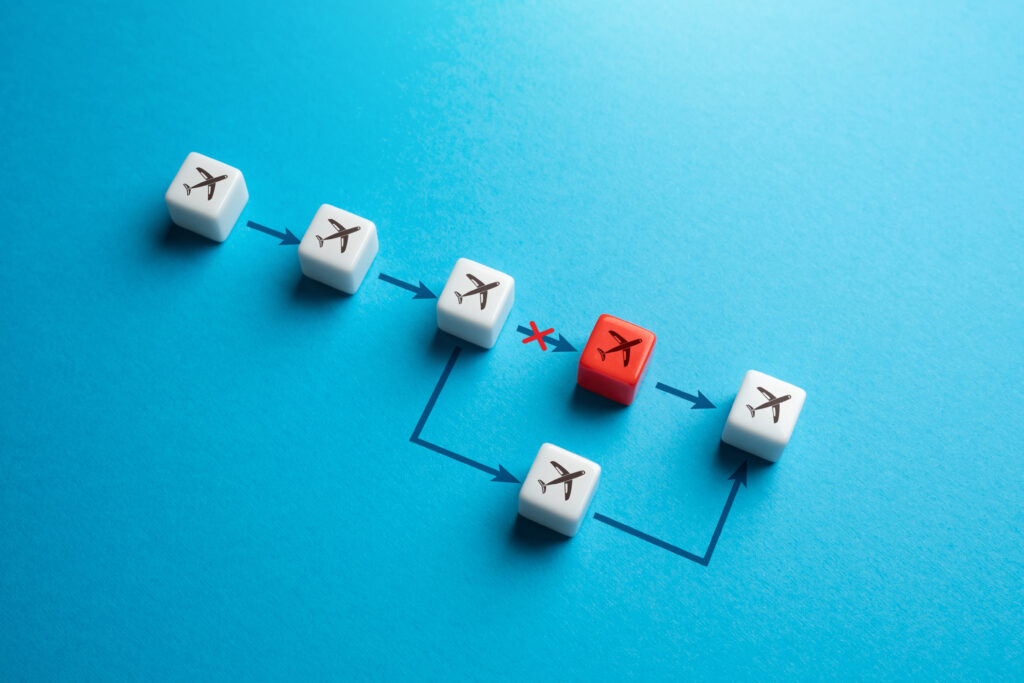
The move from PNR to One Order will not happen overnight.
Interline alignment, regulatory complexity, distribution ecosystem evolution. These are multi-year realities.
But the groundwork is being laid now.
Airlines that are investing in architecture, data models and talent today will control their retail strategy tomorrow. Those who delay risk being locked into transitional states where modern distribution sits on legacy fulfilment indefinitely.
Intermediaries will not disappear. But lazy intermediation will. The value chain is being redefined around outcomes, not access .
The same applies internally. Legacy processes will not vanish instantly. But legacy thinking must.
Final thought
From PNR to One Order is not a systems upgrade.
It is a language change for the industry.
It redefines how value is created, sold and serviced. It forces alignment between commercial and technology functions. It demands new skillsets. And it rewards clarity of execution.
The airlines that treat this as a strategic reset, not a compliance exercise, will shape the next decade of airline retail.
And the hiring decisions made over the next 12 to 24 months will quietly determine who leads that future.