
Airline and travel tech companies do not just compete on routes and revenue. They also compete for the best talent in a fiercely competitive technology landscape. Yet historically the aviation industry has lagged in diversity, equity and inclusion when compared with other sectors. For example women make up a disproportionately small share of key roles in technical and operational leadership, and minorities continue to be under-represented across many airline functions.
From a technology and commercial perspective this matters because a more diverse workforce brings a wider range of perspectives that drives innovation, enhances problem solving, and leads to better outcomes for passengers and airlines alike. But despite incremental progress over recent years, the industry still has work to do to make sure it reflects the global populations it serves.
Beyond diversity in general, engaging youth specifically helps future-proof airlines and travel tech companies. The sector is facing demographic challenges: many essential roles are held by an ageing workforce, and without proactive engagement programmes the talent pipeline could dry up in a few short years. Programs that target schools, universities, and early careers help usher in new talent, broaden the skills base, and inject fresh ideas into airline technology teams.
Oana Savu Novacescu
Looking back at the teams I’ve worked with over the years, across different roles, organizations, and cultures, one thing became very clear to me: the best ideas almost never come from people who all think the same way.
I used to think diversity was mainly about gender balance, but I’ve realized it’s so much bigger than that. It’s about different perspectives, cultures, generations, and now, entire ecosystems of how we work together.

Industry initiatives that are moving the needle
IATA diversity & inclusion awards
One of the biggest recent highlights in aviation is the International Air Transport Association’s Diversity and Inclusion Awards. Recognised at the 2025 World Air Transport Summit, these awards celebrate organisations and individuals who are making real strides in inclusion and equality across airline operations and beyond. Initiatives recognised include programmes designed to inspire underrepresented communities and support youth engagement in aviation careers.
For example winners include role models such as women who have driven large-scale engagement efforts and airline teams who are reshaping how their organisations approach community outreach and mentorship. These positive examples help set benchmarks that others in the industry can emulate.
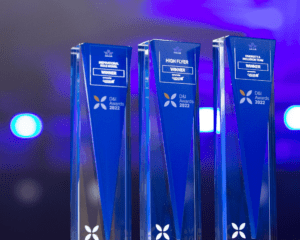
(credit: IATA D&I Awards)
Airline partnerships with diversity organisations
Another compelling example is easyJet’s recent partnership with Women in Data aimed at empowering women in data and technology within aviation. By offering mentorship, awareness-raising campaigns and clear career pathways, this partnership is geared directly at building the next generation of tech talent and ensuring everyone, regardless of background, can see themselves in future leadership roles.
This type of initiative matters not just for diversity statistics but for closing representation gaps in fields like AI, machine learning, data science and other technology domains where airlines are increasingly investing.
Oana Savu Novacescu
When you’re operating in complex environments where organizations depend on partners, platforms, and shared capabilities, teams that bring together different backgrounds tend to innovate better. Not because diversity is a goal in itself, but because complex problems rarely have one obvious answer. Cross-industry research from McKinsey & Company shows that organisations with more diverse leadership teams tend to outperform their competitors over time, mostly because they make better decisions and spot things others miss. (McKinsey & Co.)
I’ve also seen the value of bringing talent from outside a core industry. When you’re working across ecosystems, people bringing external experience often catch risks and opportunities that industry veterans have stopped seeing. Research by Boston Consulting Group (BCG) shows that organisations with more diverse leadership teams consistently generate stronger innovation outcomes, reinforcing the link between diversity of thinking and better problem-solving in complex environments.
The challenge of attracting youth in aviation
Attracting young professionals to airline careers remains a critical challenge. Awareness of the wide range of opportunities—from software engineering to revenue management and data science—is often low among students and early careers. Programs like the UK’s Reach for the Sky Challenge Fund aim to break down barriers by offering mentorship, outreach and educational experiences that introduce young people to aviation and technology career paths.
Such initiatives are vital because the industry will need both technical talent and commercial innovators to navigate digital transformation, from advanced revenue management systems to data-driven customer experiences.

(credit: easyJet via LinkedIn)
Why this matters for airline tech leaders (CIO, CTO & heads of it)
For airline technology leaders the message is clear. The war for talent isn’t just about competitive salaries. It’s about creating an environment that attracts, nurtures, and retains a diverse workforce that can thrive in complex technical environments.
Here are a few ways leader can act:
Champion inclusive recruitment
Ensure job descriptions, hiring panels and evaluation criteria are designed to attract diverse candidates and to reduce unconscious bias.
Invest in early talent programs
Partner with schools, universities and diversity organisations to create internships, apprenticeships and technology challenges that give young people first-hand exposure to airline technology roles.
Support mentorship and sponsorship initiatives
Mentor programmes that pair experienced technologists with newcomers help build confidence and career readiness while strengthening organisational culture.
Measure and communicate progress
Set clear goals and track metrics related to diversity, inclusion and talent pipeline growth so you can demonstrate impact over time.
Oana Savu Novacescu
Cultural diversity matters too, as different cultures approach hierarchy, risk, and communication in very different ways. For leaders, diversity only becomes a strength when those differences are understood, respected, and translated into clear direction. Diversity brings richness, but clarity is what gets things moving.
In complex ecosystems, diversity only really creates value when it’s paired with clear decision-making and shared accountability. Otherwise, a lot of that potential stays untapped.
At the end of the day, this is about capability rather than labels, and about building teams and ecosystems that learn faster, see wider, and stay flexible in a world that won’t stop moving.
Building the future of airline tech together
The airline & travel tech industries must embrace diversity and youth talent if it wants to remain innovative and resilient. Every organisation that commits to inclusive talent strategies helps strengthen the entire sector.
At Thornton Gregory we specialise in recruitment services built specifically for airlines, airline & travel technology. We help connect forward-thinking leaders with diverse, high-calibre candidates who can shape the next era of aviation innovation.
By embedding inclusion and youth engagement into your talent approach you not only do what is right but also what is smart for long-term business success.
Finally, here are a few reflective questions to leave you with:
-
Can legacy organisations adopt modern technology without also modernising how they attract, trust, and grow talent?
-
Who is consistently in the room when key technology decisions are made, and who is not?
-
Are we building teams for today’s constraints, or for the systems airlines will need to run in ten years?
Author/s

Oana Savu Novacescu
Executive leader with nearly 20 years of experience driving growth, innovation, and transformation across diverse organizations, from global corporations to scale-up startups. I have led strategy, partnerships, product, and ecosystem initiatives that deliver measurable impact and long-term value, supporting digital transformation at scale.
I bring together long-term vision and hands-on execution, translating new ideas and technologies into practical solutions that work in complex, real-world environments.
I’m driven by a desire to create meaningful impact, with a strong focus on people, collaborative leadership, and thoughtful execution in dynamic environments.

Rachael Thornton
With 20 years of experience in recruitment and a decade leading TG, I’ve built my career on connecting exceptional technical talent with leading airlines and airports around the world. My passion lies in understanding the intricate needs of aviation businesses and finding the specialists who keep them flying safely and efficiently.
Outside of work, I’m a proud mum to a wonderful daughter who keeps me on my toes. When I’m not recruiting or parenting, you’ll probably find me on the tennis court, in the garden with a glass of fine Chablis, or both — ideally on a sunny afternoon.